As an Amazon Associate, we earn from qualifying purchases. Some links on this site are affiliate links at no extra cost to you. Our recommendations are based on thorough research and editorial judgment.


What Is Tango Posture?

Tango posture is a multifaceted concept that encompasses essential elements, such as core alignment, weight distribution, and upper body positioning. I must pay attention to keeping my spine aligned, engaging my core for fluid movement, and ensuring my shoulders remain open, promoting balance and connection. Proper head and neck positioning also supports my overall stability. The side body plays a critical role, stabilizing my frame and facilitating communication with my partner. There’s much more to explore regarding these intricate elements.
Key Takeaways
- Tango posture emphasizes core alignment for stability and fluidity during movement between partners.
- Proper weight distribution allows followers to maintain balance and elegance while dancing.
- Upper body posture is characterized by flat, open shoulders and aligned ribs, promoting grace.
- Head and neck positioning should remain neutral to support spinal integrity and prevent fatigue.
- Engaging the side body strengthens stability and improves communication within the dance embrace.
Core Alignment in Tango Posture
In understanding the intricate dynamics of tango, one begins to appreciate the profound significance of core alignment—an elemental aspect that cultivates both stability and grace during movement. Core engagement serves as the foundation for an articulated posture, influencing how I connect with my partner and maintain balance. Central to this is the alignment of the spine, requiring a poised head and neck that’s comfortably situated over the shoulders, avoiding any forward jutting. This alignment preserves the integrity of our tango frame and allows for seamless communication. Additionally, engaging my core muscles guarantees a fluid dissociation between my upper and lower body, enhancing both my rotational abilities and overall poise, essential for a compelling tango performance. Proper footwear choice is also critical, as it directly impacts my balance and control on the dance floor, further supporting my core alignment.
Weight Distribution and Balance
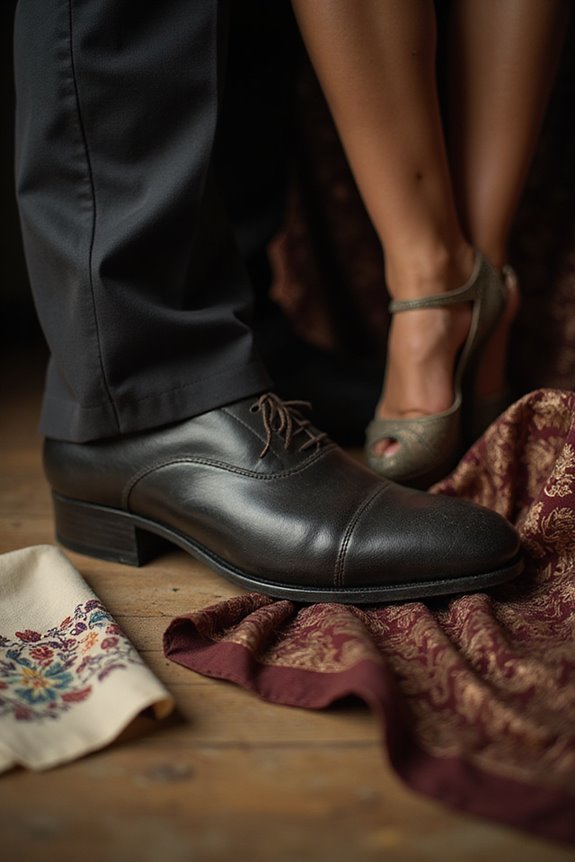
Weight distribution and balance form a multifaceted framework that seamlessly integrates with core alignment, further enriching our tango experience. In tango, I often find that my weight rests primarily on one foot, especially as a follower, while my partner, as the leader, disperses weight across both feet. Proper weight shifts, wherein the weight-bearing foot conducts my body weight directly downward, are essential for stability. Alignment must remain intact, with knees close together to support the body’s central axis. Additionally, maintaining balance techniques, such as placing weight slightly behind the balls of the feet, enhances control and smoothness in my movement. Ultimately, a mindful approach to weight management allows me to execute elegant strides and maintain a strong connection with my partner. Furthermore, the choice of tango shoes with suede soles significantly aids in achieving this balance during dance.
Upper Body Posture and Connection

Upper body posture and connection are vital elements in the dance of tango, greatly influencing both individual dynamics and partner interaction. To achieve an effective upper body frame, I’ll focus on shoulder alignment; shoulders should remain flat and open, avoiding tension that disrupts the connection. I find it helpful to position my shoulders in a neutral stance, engaging my shoulder blades to maintain a stable embrace. The alignment of my ribs with my stomach, gently closing without collapsing the chest, is also important for balance and elegance. Engaging my core allows my upper body to remain fluid, supporting natural movement while ensuring the frame is responsive. By integrating these elements harmoniously, I create a connected and articulate tango experience. Additionally, wearing appropriate tango heels can enhance my posture and overall dance performance.
Head and Neck Positioning

The significance of head and neck positioning in tango can hardly be overstated, as it serves as the foundation for maintaining balance and ensuring connection with my partner. Proper head alignment, with the head balanced directly above the neck and shoulders, not only promotes spinal integrity but also enhances neck stability, minimizing discomfort and the risk of strain. During dynamic movements, I’ve found that misalignment can lead to muscle fatigue and potential injury. Therefore, maintaining a neutral and straight neck without tilting or swaying is essential. Depending on the tango style—be it salon or milonguero—my head’s position may subtly shift, but it remains important to maintain a vertical axis, allowing seamless weight transfer and facilitating graceful, controlled pivots throughout the dance. Additionally, proper material quality in tango shoes can significantly improve overall posture and balance during the dance.
Role and Importance of Side Body

When considering the intricacies of tango posture, it becomes evident that the role of the side body is multifaceted, providing essential support for both balance and connection with a partner. Engaging the side body is vital; it stabilizes our frame and maintains our posture integrity. Through strength training, I’ve found that reinforcing the muscles along the rib cage and lateral torso not only enhances stability but also fosters seamless communication between partners. When done correctly, side body engagement helps transmit weight shifts efficiently, allowing for fluid movement and connection. If the side body remains weak, it disrupts the embrace, resulting in gaps and instability. Ultimately, cultivating strength in the side body is central to sustaining a dynamic tango experience. Additionally, engaging the side body effectively can lead to improved social dancing skills, enhancing your overall performance and connection on the dance floor.
Leg and Foot Technique in Posture
Engaging the side body forms a solid foundation for the sophisticated techniques involved in leg and footwork within tango. Effective foot placement is essential, as each step requires the heel to land first, shifting smoothly onto the ball of the foot, ensuring a precise weight transfer. This rolling motion is particularly crucial for the follower, who must extend and land gracefully, maintaining connection without distortion.
Leg extension, key in achieving elegance, also relies on controlled hip rotation. As I extend my leg, I lower the hip to create a long line, facilitating balance. Proper alignment means avoiding the sickle position, which would jeopardize stability. By focusing on meticulous footwork, I uphold the fluidity and sharp lines that characterize tango, enhancing our overall posture. Additionally, employing cushioned insoles can significantly reduce foot fatigue during rigorous dance sessions, supporting sustained performance throughout practice.
Enhancing Tango Posture for Better Performance
Achieving an articulate tango posture greatly enhances overall performance, as it serves as the foundation for executing intricate movements and connecting with a partner. Focusing on tango muscle activation is essential; engaging your back and core muscles not only stabilizes your frame but also promotes fluidity in movement. This necessitates continuous posture maintenance—prioritizing shoulder alignment and avoiding tension in the upper body. Through consistent practice, I utilize specific exercises that enhance flexibility and strength, ensuring my posture remains dynamic rather than static. Regularly evaluating my posture allows me to correct common mistakes, such as rib popping or improper shoulder elevation, ultimately contributing to a more elegant and controlled tango experience that deepens the connection with my partner.
Frequently Asked Questions
How Does Tango Posture Affect Overall Dance Style and Expression?
Tango posture’s like a canvas; when I achieve perfect body alignment, movement fluidity effortlessly flows, painting my dance with expressive grace. Each subtle shift enhances my connection and style, transforming steps into heartfelt storytelling on the floor.
Can Beginners Adopt Advanced Posture Techniques From the Start?
I don’t think beginners should adopt advanced posture techniques right away. Focusing on beginner techniques first builds a strong foundation. Gradually incorporating advanced principles helps us develop muscle memory and stability for better overall dance expression.
What Common Mistakes Should Dancers Avoid in Tango Posture?
Oh, we all love a good tango mishap! Common mistakes? Ignoring posture corrections—like mixing steps or overusing back muscles. Trust me, you’ll save yourself from looking like a clumsy marionette on the dance floor!
How Does Posture Vary Between Different Tango Styles?
Posture differences across tango styles reflect their unique influences. I’ve noticed Milonguero’s lean blends intimacy, while Salon’s upright form offers space. Each style shapes my dancing, emphasizing connection, balance, and the beauty of movement in various ways.
Are There Any Exercises to Improve Tango Posture Outside of Dance Classes?
I focus on core strength through exercises like planks and bridges, along with flexibility training like shoulder stretches. Regular practice really enhances my tango posture, making movements smoother and more confident when dancing.