As an Amazon Associate, we earn from qualifying purchases. Some links on this site are affiliate links at no extra cost to you. Our recommendations are based on thorough research and editorial judgment.


What Are Tango Techniques?

Tango techniques are a multifaceted blend of movement strategies and body mechanics, designed to create a profound connection between partners. I focus on proper posture, which aligns with intricate footwork, emphasizing stability and fluidity. Techniques like giros, ochos, and sacadas articulate movement while engaging the core and enhancing expressiveness. Additionally, understanding musicality fosters synchronization and emotional connection, enriching the overall dance experience. Explore further to uncover the intricacies of this enchanting dance form.
Key Takeaways
- Fundamental movement techniques include walking styles, turning motions, foot play, and sharp directional shifts for expressive dance.
- Proper body mechanics emphasize alignment, relaxed posture, and effective weight distribution for improved stability.
- Key figures in tango comprise cross steps, ochos, sacadas, ganchos, and boleos that enhance movement fluidity.
- Musicality and emotional connection are vital, fostering partner synchronization and a deeper understanding of tango’s rhythms and dynamics.
- Expressiveness and intentional articulation become essential, allowing dancers to convey emotion and artistry through subtle movements and grounding techniques.
Fundamental Movement Categories in Tango
In understanding the multifaceted nature of Argentine tango, it’s essential to recognize how fundamental movements centralize the dance’s expression and connection. Walking techniques serve as the foundation, emphasizing smooth, deliberate steps along the line of dance. Integrating turning styles, such as giros and molinetes, dancers execute intricate circular motions that enhance the overall connection. Line movements facilitate directional shifts, enhancing spatial awareness and creating a unified dancer experience. Foot play adds complexity through embellishments like ganchos and boleos, allowing for artistic expression and precise timing. Finally, kicks, flicks, and swivel dynamics punctuate routines with sharp energy, enabling quick directional shifts. Together, these elements weave a rich tapestry of movement that defines Argentine tango’s enchanting allure. Proper dance shoe fit is crucial for optimal performance and connection on the dance floor.
Body Mechanics and Posture
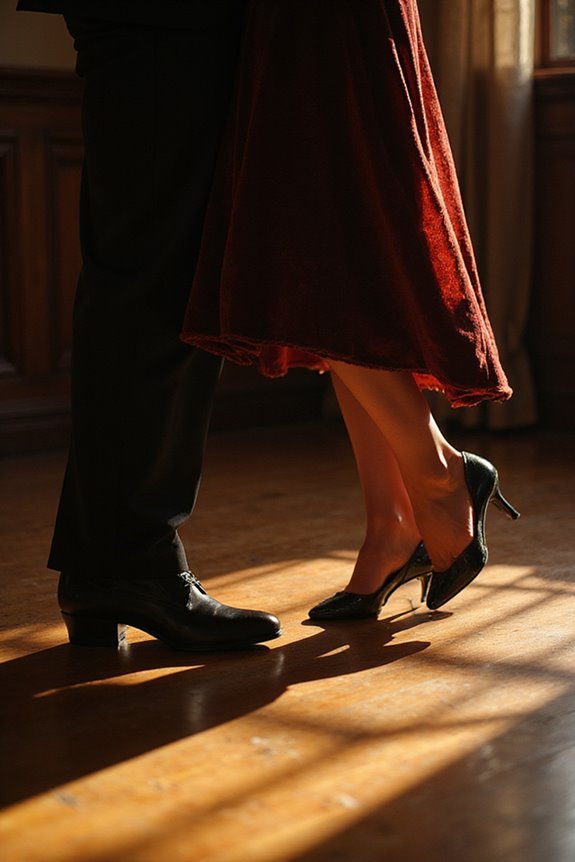
Mastering body mechanics and posture is paramount in Argentine tango, as these elements greatly influence a dancer’s ability to connect and express emotion through movement. Proper body alignment is essential; I focus on keeping my head directly over my shoulders, maintaining a relaxed neck and deliberate eye gaze for balance. Shoulders are held flat and open, avoiding tension, which allows for a more fluid embrace. Posture correction is important, ensuring my torso remains upright with a slight curve, initiating movement from the core rather than the arms. I always manage weight distribution over the balls of my feet, aligning hips under the torso to maintain stability. This attention to detail makes every step a clear expression of our connection. Additionally, understanding the best heel height for beginners can greatly enhance comfort and stability as I improve my technique.
Recommended Products

Authentic Spanish Sound – Toe & Heel Nails (clavos) Crisp, resonant beats make these flamenco shoes with nails the favorite of escuelas de baile and studio teachers. Perfect for flamenco dance shoes women need to master rhythm early on.

Traditional ballroom and latin shoe with a classic oxford upper in soft full grain leather

VERSATILE LEATHER CHARACTER SHOE: A classic character shoe with a full leather upper and leather lining, finished with a contoured, chic 2½" heel — equally at home in musical theatre, character, and jazz routines.
Key Step Variations and Figures
Exploring key step variations and figures in Argentine tango reveals a multifaceted landscape of movement, intricately woven together to articulate the dance’s expressive potential. Among the foundational movements, cross step variations, such as the forward and back crosses, set the stage for intricate figures. Then we investigate ocho techniques, encompassing forward and backward ochos, alongside the dynamic cut ocho, which injects sudden direction changes.
Sacada applications further enrich our vocabulary, displacing a partner’s foot with purposeful grace. The engaging gancho dynamics add drama, hooking legs in mid-step, embodying connection and intricacy. Finally, boleo movements, characterized by swinging free legs, serve to emphasize the dancer’s responsiveness. These elements collectively enhance the depth and artistry inherent in tango. Additionally, mastering these specific dance styles can greatly improve a dancer’s techniques and overall expression.
Recommended Products

Very Fine Darius Dance Slipon Loafers. Easy, comfortable and convenient to put on and take off.

Duo Sole Design: Suede sole with rubber insert offers optimal grip and slide.

Fit: If you are used to the snug fit of performance dance shoes, we recommend ordering a half size down from your regular street sneakers. Dance sneakers hsould be snug to pretct your feet and ankles during strenuous dance movesDance in comfort and style with the Very Fine Icarus Practice Dance Sneakers. Suede outside and genuine leather interior to expand and fit your foot like a glove.
Footwork and Weight Transfers
While it might seem straightforward, footwork and weight transfers in Argentine tango reveal a multifaceted interplay that not only enhances the dance’s visual appeal but also articulates its technical precision. Proper foot placement emphasizes heel leads, allowing for clean lines and effective movement coordination. As I execute each step, maintaining stable posture stability is essential; I shift weight seamlessly from my standing leg to the moving leg. Hip engagement becomes critical for extension and fluidity, where my hips lower slightly, supporting graceful changes. Additionally, my focus on line creation guarantees each motion feels precise and elegant, avoiding any overlap of rising and falling. Ultimately, these elements come together to elevate both aesthetics and technique within the dance. Understanding the historical origins of tango music profoundly adds to the dancer’s appreciation and connectivity to the art form.
Characteristic Movements and Style Elements
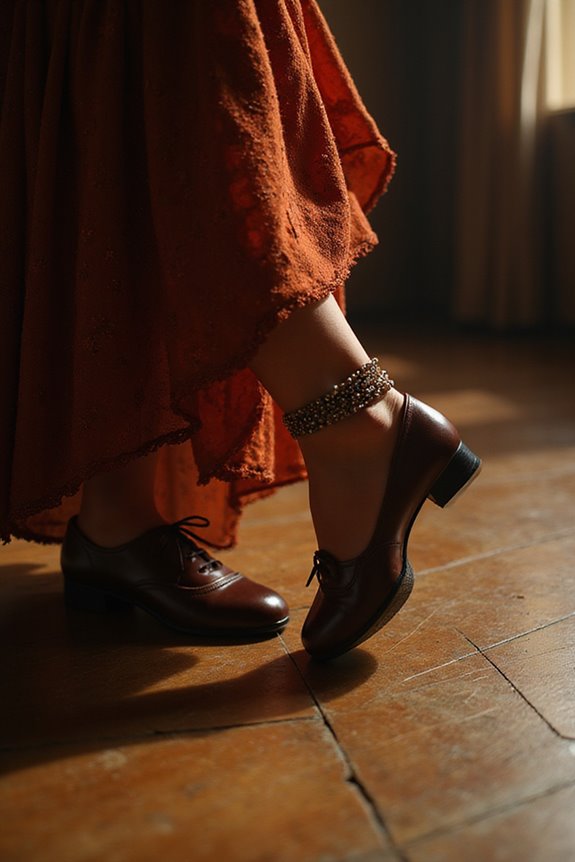
In Argentine tango, the interplay of characteristic movements and style elements creates a rich and engaging dance experience that captivates audiences and dancers alike. The dramatic gestures, such as sharp head snaps and staccato actions, contribute to the intensity and flair of the performance. This dance form thrives on emotional storytelling, where every twist of the torso and shift of weight articulates complex feelings—from passion to nostalgia. Achieving proper posture with a grounded center of gravity, I find that maintaining an upright torso and effective use of space enhances both connection and expression. Ultimately, each movement not only reflects the dancer’s individual interpretation but also weaves a narrative that resonates deeply with the music, culminating in a mesmerizing experience. A strong, steady pulse combined with syncopation enhances dramatic flair, allowing dancers to fully immerse themselves in the emotional nuances of the music.
Musicality and Partner Coordination
Musicality and partner coordination represent a multifaceted relationship that considerably enhances the Argentine tango experience, facilitating a deeper connection between dancers and the music. Developing musical awareness allows us to interpret rhythm and melody beyond merely stepping on the beat; it’s about embracing musical nuances, identifying rhythms, and articulating melodic phrases through movement. This synchronization transforms average dancers into artists, as we often match our energy and movement qualities to the music, creating an interplay of expression. In addition, understanding the musical structure fosters a shared vocabulary between partners, enhancing communication and responsiveness. By actively engaging with musical dynamics and emphasizing rhythmic interpretation, we not only elevate our dance but also cultivate a profound connection, leading to a more enriched tango experience. This is especially evident in tango jazz fusion, where the blend of traditional elements and improvisation can deeply influence the expression and connection between partners.
The Role of Embrace in Tango
Tango, at its core, is an intricate dance of connection, and the embrace serves as the foundation for this relationship. The physical closeness, whether in a real close embrace or a fake close embrace, establishes an emotional connection essential for effective communication signals between partners. This tactile channel allows us to perceive subtle shifts in weight and directional intent, fostering a fluid exchange during the dance. The embrace’s adaptability enhances not only the rhythm of our movements but also the emotional depth of our interaction. By engaging our upper bodies without collapsing into one another, we maintain an exquisite balance that celebrates both intimacy and personal expression. Ultimately, the quality of our embrace greatly influences the overall enjoyment of our tango experience.
Developing Balance and Control
Achieving balance and control in tango is akin to mastering the foundation of a complex structure; without it, the dance risks disintegration under the weight of intricate movements and emotional exchanges. To cultivate this essential skill, I engage in balance drills, such as swinging leg exercises, which enhance single-leg stability critical for pivots and shifts. Stability exercises, including arm lifts, promote upper body steadiness, ultimately supporting seamless movement. It’s essential to maintain proper posture and hip alignment, ensuring weight transfers correctly onto the supporting foot. This allows for effective foot positioning and aids in fluid turns. By systematically practicing these techniques, I notice a marked improvement in my groundedness, reducing wobbling and enhancing my overall dance experience.
Enhancing Expressiveness in Movement
Enhancing expressiveness in movement is a multifaceted endeavor that transcends mere technical proficiency; it requires a profound understanding of how subtle dynamics and nuanced shifts contribute to the emotional fabric of tango. By employing shift techniques effectively, I can convey emotional textures through fluctuations in weight and pace. Integrating breath incorporation into my movements not only enriches the rhythm but also enlivens the dance with expressive nuances that resonate deeply. Articulating the body with intention—like pausing at pivotal moments or manipulating my embrace—informs the emotional statement of each phrase. Ultimately, mastering these elements fosters a connection not only between partners but also between the dance and its musical interpretation, channeling the true essence of tango’s rich expressiveness.
Recommended Products

Dance in comfort and style with the Very Fine Icarus Practice Dance Sneakers. Suede outside and genuine leather interior to expand and fit your foot like a glove.
Authentic Spanish Sound – Toe & Heel Nails (clavos) Crisp, resonant beats make these flamenco shoes with nails the favorite of escuelas de baile and studio teachers. Perfect for flamenco dance shoes women need to master rhythm early on.

Water Resistance Level: Not Water Resistant
Frequently Asked Questions
How Can Beginners Improve Their Tango Skills Quickly?
To improve my tango skills quickly, I focus on practice drills for rhythm and posture, and I watch video tutorials. They really help me refine my technique and boost my confidence on the dance floor.
What Clothing Is Best for Dancing Tango?
For dancing tango, I recommend breathable fabrics and comfortable clothing that allows movement. Stylish tango fashion, like knee-length dresses or dress trousers, enhances dance comfort, helping me focus on the music and my partner instead.
Are There Specific Shoes Recommended for Tango?
I recommend trying different tango shoe styles with varying heel heights to find what feels comfortable. A lower heel helps beginners gain confidence, while higher heels support more advanced movements in tango. Keep comfort as a priority!
How Do I Find a Good Tango Instructor?
When seeking a stellar tango instructor, start scouting for their qualities: passion, pedagogy, and community involvement. I find local classes, engaging with experienced dancers, helps uncover the best choices for effective learning.
What Are Common Mistakes to Avoid in Tango Dancing?
In tango dancing, I’ve learned to avoid mistakes like poor body posture and frame adjustments. Keeping alignment and staying present in each movement helps maintain balance and improves our connection, creating a more enjoyable experience together.